

Lessons from 44: Welcome to the murk!
Insights from a year that surprisingly did not suck

On July 8th, I turned 44.
The repetition, the doubling, satisfies. No hiding it now. Deep in those forties. As if the universe were rubbing it in: still want to slide back and pretend we’re a sweet little 39? FOUR-FOUR.
On last year’s birthday, I was on a remote surfer’s beach in Oaxaca with Jorge, Elena, and my dad. We spent the day bodysurfing and drinking cold Victorias and watching fearless, beautiful people glide down the waves in the distance.
I was still numb from a gut-punch of failure earlier that week. A big one, folks, one that really draws into question past, future, financial viability, life choices, you name it! The stuff of crushed dreams, etc etc.
I was carrying this boggy, heavy sense of loss, the kind of loss consuming enough that you can’t actually look at or think about it directly. But also, I was grateful. I was so grateful to witness those 5 a.m. sunrises with the musical accompaniment of La Bocana’s competing backyard roosters, to sit with my family and stare at the endless Pacific, to simply be there.
This year, I spent my birthday where I usually do: at my parents’ farm in Southeastern Ohio, meditating to the tune of crickets and wrens, swimming in the disconcertingly opaque green water of Seneca Lake, eating Jorge’s birria tacos and homemade vanilla cake. As humans do, I studied my life through arbitrary markers of time: July 8th to July 8th. And what I was most surprised to see was that this year, primed for sucking, did not suck.

Let’s be clear here: this is not a story in which, asked on Fresh Air about these dark times, I laugh to Terri, “Well, you’ll never believe it, but just when I was about to give up, the idea for XYZ came to me and the book sold at auction for six figures!” Nope. I am still a part-time adjunct instructor of Seminar in Composition who runs the same five miles a day at the same middling pace and has a weakness for Cheez-Its and has gotten pretty into birding and done basically nothing of grand societal importance in the last year or really, ever!
And so I guess forty-four is about the murk. The murk of our rapidly changing society, of course, in which us millennials who – already listening carefully to Bernie Sanders’ warnings that we are worse off than our parents – still went ahead with plucky determination and freaking decided to be artists, and are now watching the number of non-gig-economy jobs and the freelance pay for prestige publications dwindle to .0000% of nothing, and the cost of oatmeal rise to $279.49, and AI billionaires blithely declare in soundbites that “the humanities are more vital than ever!” and the National Endowment for the Arts get completely defunded, and so on and so on….but also the murk of midlife, where the dreams of glory on late-night subway rides and beery declarations of intent and passionate applications at 27 come to faceplant.

Welcome to the murk. I’ve spent the last year about chest-deep in it, and so I have a few insights to share. They may be helpful to you, they may be completely irrelevant. But as I look back on the year that could have sucked but didn’t, I think it’s important to point out that the not sucking wasn’t because of anything that would have signified Greatness to me before. It wasn’t about any particular accomplishment or goal. It was about a whole host of things I became aware of when I had nothing to achieve.
1) Growth is slow. If you are twenty-eight or maybe even thirty-five you may be – I would have been! – laughing at this. Sure, girlie, just because you’re spending your days meditating on your front porch in Pittsburgh doesn’t mean I’m not going to be Reese Witherspoon’s darling next year! Indeed, indeed. But figuring out what that actually will do for you and what you will do with it – slow as hell. A glacial thing. What you thought you wanted, thought you needed, thought defined you…snail-paced.
Jorge has always been in charge of the plants in our house. He grew up in a tiny village in rural Mexico and went to an agricultural high school and knows which plants want to be gently misted with the Target spray bottle and which like rocks in their soil and which will grow white fungus if ignored and potentially demonically contaminate every other plant in the house.
But at some point in the past year or two, I became the plant person. This was not something he or I ever decided. I can’t even remember how it started. But now the plants are my job, and we have fourteen bigass, thriving plants.
(Okay, full transparency: three are pothos and three are spider plants that are super-easy to propagate and basically impossible to kill).
Most plants are slow. They also have seasons. When I put them out on the front porch for the summer, some of them, like the pilea, go nuts. The pilea puts out so many shoots and shiny new leaves it seems like she’s going to generate her own miniature jungle…and then she comes in sometime in September and basically brings everything to a screeching, affronted halt. A lot of the new green fades, and some stays. Like this, gradually, she grows.
Other plants, like the fiddle-leaf fig, put out one leaf so surreptitiously and slowly that only if you drop something behind the radiator and put your nose right up in the dirt do you say oh, hey! A leaf!
Meditation is also slow. I have been meditating almost daily for five years now and I think I can say I am maybe a little bit calmer. This year, maybe 3-5 times, I have been able to not react when before I would have been all unrestrained immediately regrettable emotion.
I have been able to not send an email for a full twenty-four hours, and then carefully revise it, and sometimes not send it at all. I have been able to catch myself and say wait, where am I, and realize that I am floating in a kayak in the middle of a lake but actually have been dwelling for some unspecified time in an imaginary future misery where I can’t afford college and Elena is weeping before me. I have a set of go-to meditations for plane rides. These are not sexy things. They are slow, good things.

2) The everyday can be a lovely and creative place. In the fall, we got a puppy. Like any creature that requires exhaustive caregiving, said puppy rooted me firmly in days: early morning stumbles outside, afternoon walks, naps that brought the memory of newborn baby days and the swift relief of peace after frenzy. There was always something to do with the puppy and that something rarely if ever involved thinking about the next five years or ruminating on poor decisions made over the past decade.
These are some things I have done almost every day this year, in addition to teaching and writing: meditated for twenty minutes; walked my dog in the afternoon; run 5-6 miles; cooked dinner; called my mom; kept a moon journal and dumped my agitated psyched into my Moleskine for 15 minutes every morning; trained the dog for twenty minutes; read. None of these items require much, if any, money.

3) Relationship is key. This was a really hard one for me. I am a productivity-holic and I am still kind of proud of that. I actually enjoy the work I do, even if it is maddening and underpaid and uncertain and apocryphal, and if given the choice I’ll usually choose to do it above anything else.
But this year, partially because I went through a spell where if I was alone too much I’d start to sink into a funky, dark place, I replaced some of that work time with people time.
When a friend would ask if I wanted to take our dogs for a walk, I agreed. Sometimes I arranged coffee dates with friends early on weekday mornings, previously absolutely sacred and inviolable work time. I talked to the other parents at basketball games, at soccer games, at swimming. I texted my niece to come over and eat tacos. I joined my insanely fast (and very tolerant) marathoner neighbor down the street for some 7 a.m. runs. I hung out solely for the sake of hanging out, not for deep conversations or soul bonding. I mostly said yes when invited. I never regretted this.
I started giving random compliments to strangers. I am serious, it is crazy how good this feels. I love your socks. I love your hair. I love your dog. I told a guy in a parking lot who was changing his daughter’s diaper in the back of his truck that he was doing great. At forty-four, this is the new high, my friends.
I also put relationship first with my students. I wanted to know them as people. I conferenced with them three times a semester; we shared inside jokes; I wrote them recommendation letters; they showed me photos of their boyfriends; they told me they were struggling; they asked how my dog was doing. This felt really good, and surprise surprise, it was good pedagogy. It made me want to keep teaching and to keep learning about teaching.

4) Time in the “real world,” preferably outside, beats the Internet by a hundred million miles. Not performing your life and not comparing yourself to others are the actual shit! I basically stopped using social media this year. I made a rule, which I broke almost daily for most of the year but doggedly kept noting each morning in my journal, to not use my phone after 7 (I slowly got better at turning it off around 9, then not keeping it in the bedroom, though 7 remains aspirational). I read mostly books and listened to audiobooks. I did read The New York Times almost daily (I get a free subscription through Pitt) and at certain times, like during the ICE protests in Minneapolis, I read a lot more news because it felt so relevant and urgent to my family.
But overall, I really tried to limit my consumption. Things I did other than being on the Internet:
Took care of plants/gardened
Called my family
Cooked/baked
Walked the dog
Did strength training (picked this up in the spring with five-pound weights, so dinky but very fun)
Went to the library
Wrote letters/cards
Danced with Elena

5) Open or closed. I have started an anxiety program and one of the fundamental tenets is this simple question: are you open or closed right now? What does your body feel like?
If there’s clenching, tension, tightness, if you feel yourself bracing, you’re closed. If there’s looseness, relaxed muscles, a free flow of breath, you’re open.
The first step is just to pay attention to when you’re in either state. Sometimes all it takes to ease from closed to open is awareness: this is what closed feels like. This frees something up.
Most of us rarely realize when we’re open – we don’t watch for that. That alone tells us something – what happens when we start paying attention to that light, loose feeling?
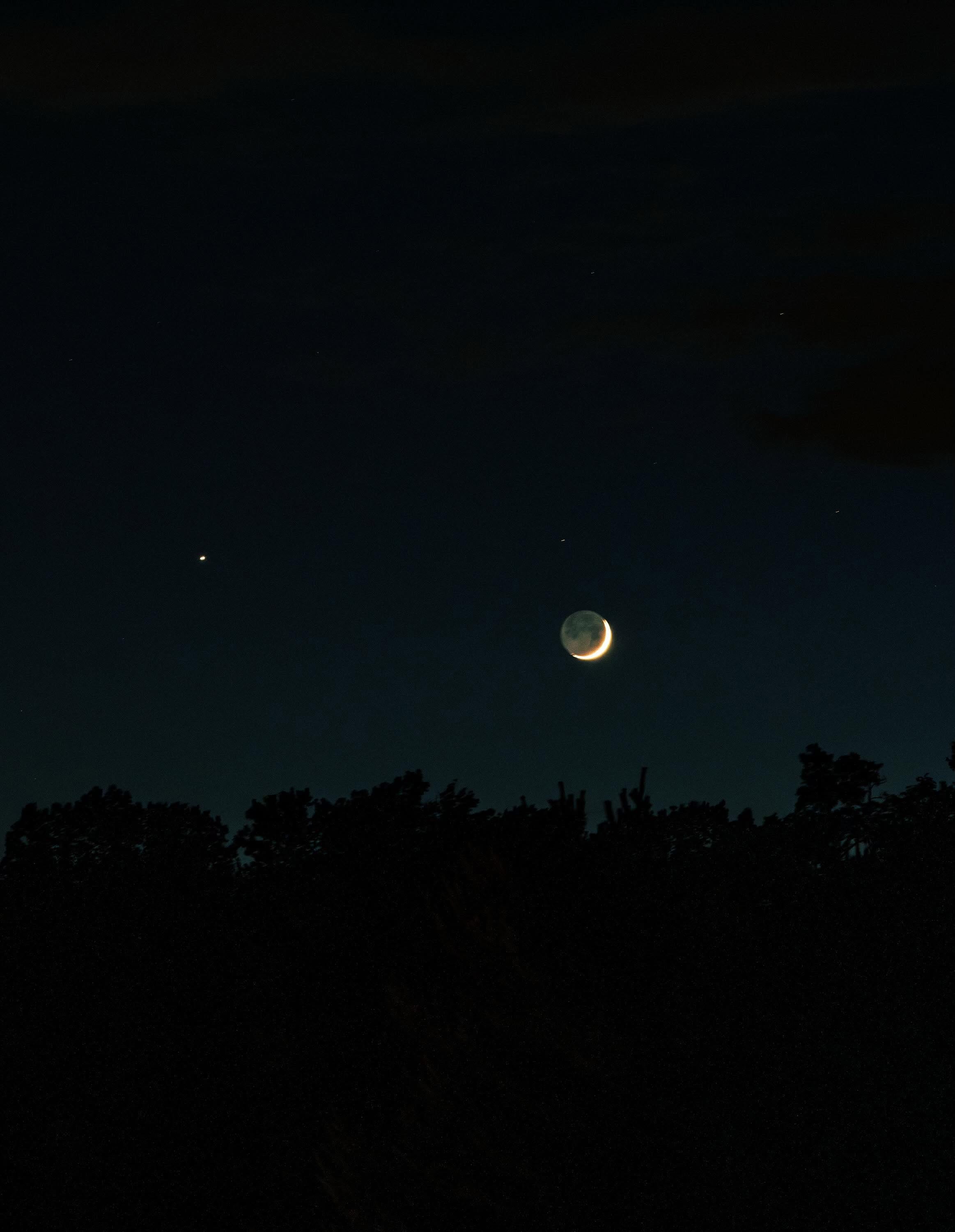
Open comes from relationship. It comes from having a little space. It comes from an unexpected compliment. It comes from the smell of water hitting soil – petrichor. It comes from bare feet, being outside. It comes from wonder. It comes from leaving the desk and lying down beside the dog, forehead to fuzzy muzzle. It comes from the miracle of restraint, self-discipline, not shouting “No one needs that much lip product!!” when your daughter applies her eighteenth coat of lip gel/gloss/liner/goo. It comes from forgiving yourself. It comes from the bigger picture: look, I get to be here on this beach. It comes from beginner’s mind, non-judgement. It comes from remembering to look at the moon. It comes from slow. It comes from practice. It is a minor key, not like the strident chords of 27, or 32, or even 40 – a chime, a hum, a fall cricket on a thistle, just right for forty-four.
I hope you’re enjoying Terms of Endearment!
Here you’ll find essays about art, travel, books, motherhood, culture, teaching, and more.
This work is free for everyone. A paid subscription supports the labor that goes into it – the time, energy, thought, and care behind each piece.
For $30 a year, you can support writing you care about. Thank you!
Recommendations
I am on a Katie Kitamura kick and part of me finds her work enervating and slow and overly cerebral, but another part of me cannot. look. away. First I listened to the audiobook of Audition and then Intimacies. The narrator for both is lovely, and I’m very sensitive/picky about audiobook narrators!
This extensive investigative reporting on Andrew Tate is absolutely horrifying. It will make you sick, but you should read it.
I have lots of strong feelings about this piece. Please write me if you read it to discuss.
Really enjoyed Suleika Jaouad’s latest on peacocks.
Jorge and I have watched loads of the World Cup, to the point of obsession, and I think Rosie Spinks piece on collective effervescence captures what’s so alluring about it.
Have a lovely weekend, all.
love this, as always the exact perfect words. feliz cumpleaños amiga
Happy birthday! I loved reading your insights. This here crone is now going to steal your line: you’re doing great!