

A Happening
On performance art, a delightful book of colors, and bringing the splendor back to writing.

The neighbors are moving to Charleston, South Carolina, and they left a box of books on their front steps with a FREE sign.
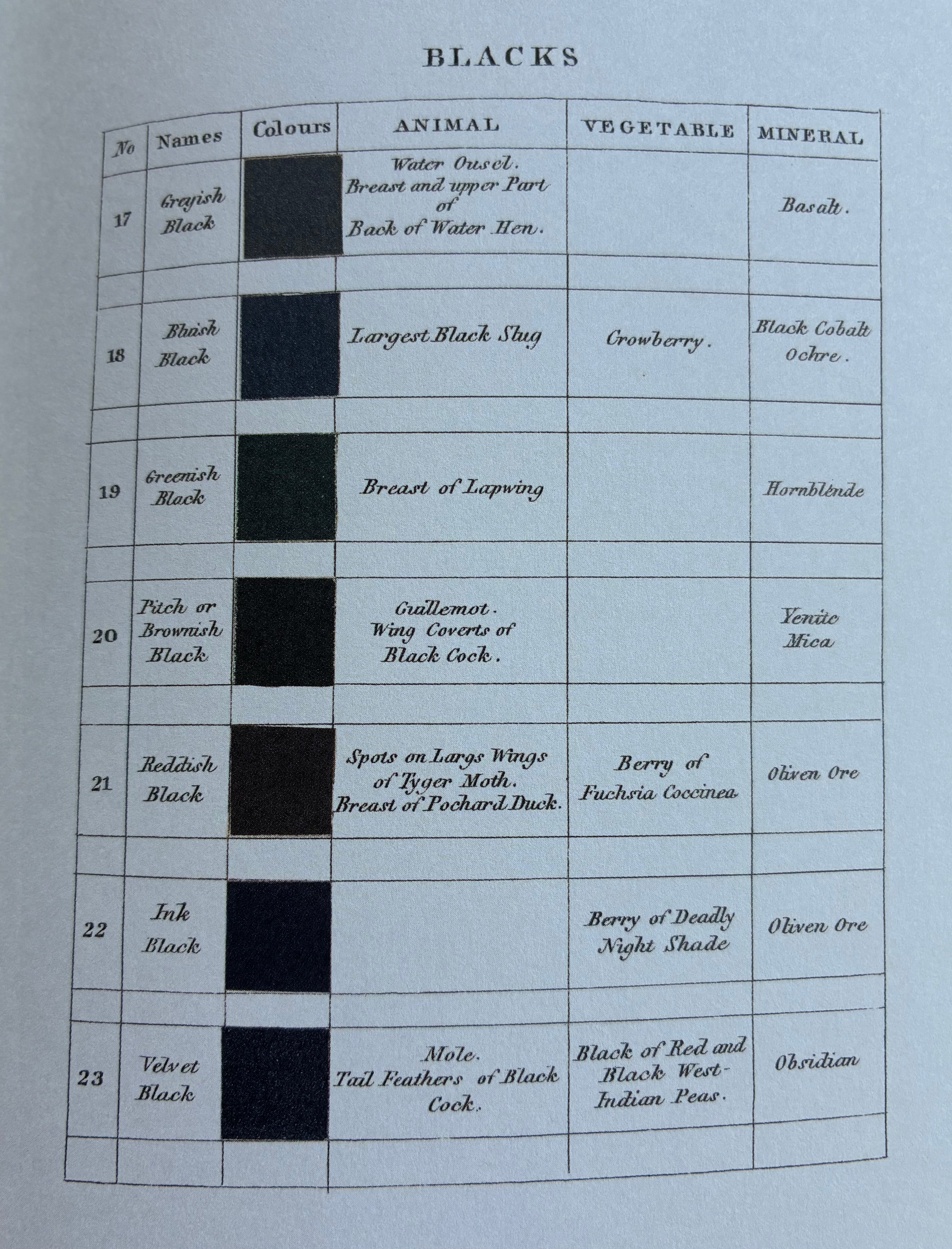
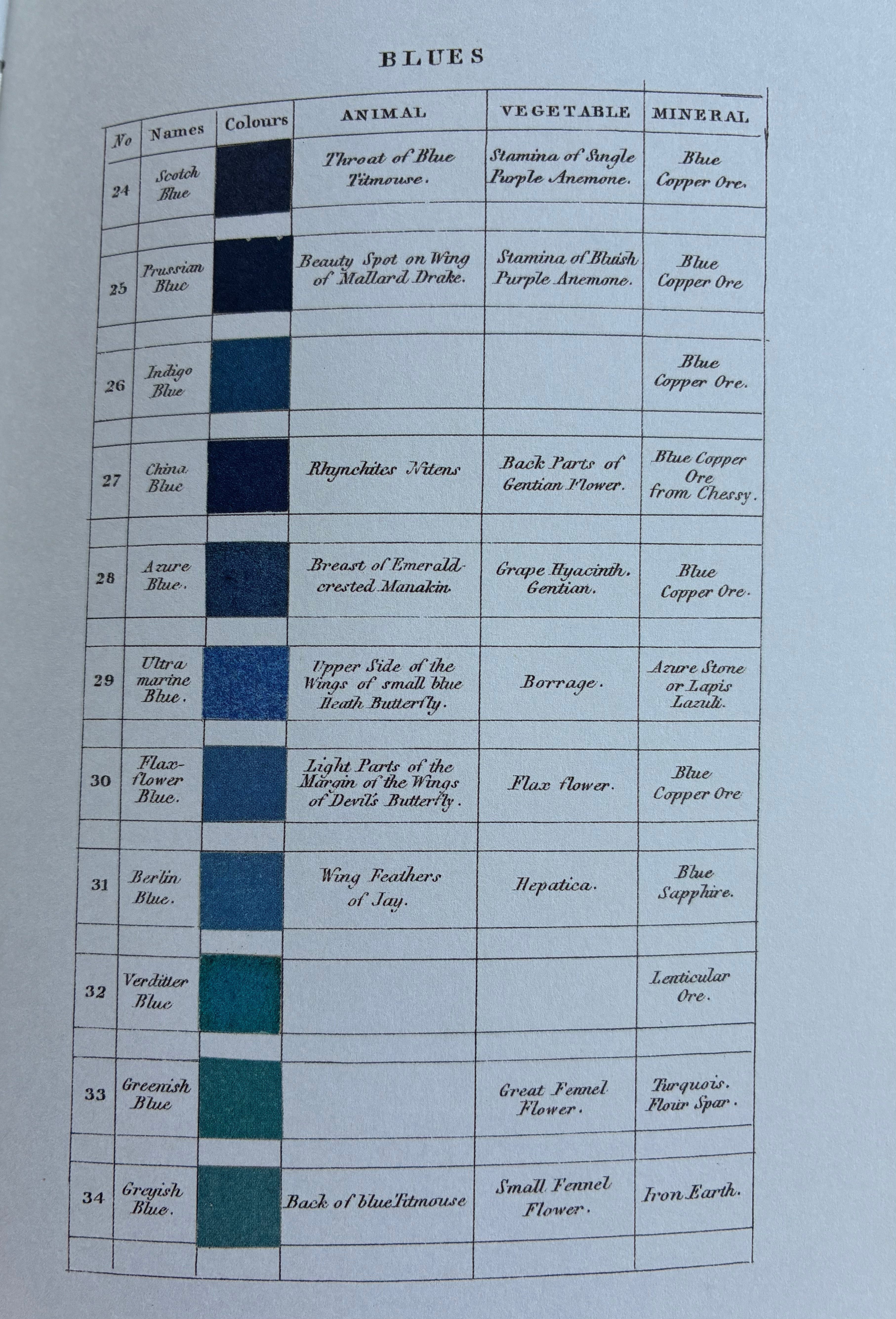
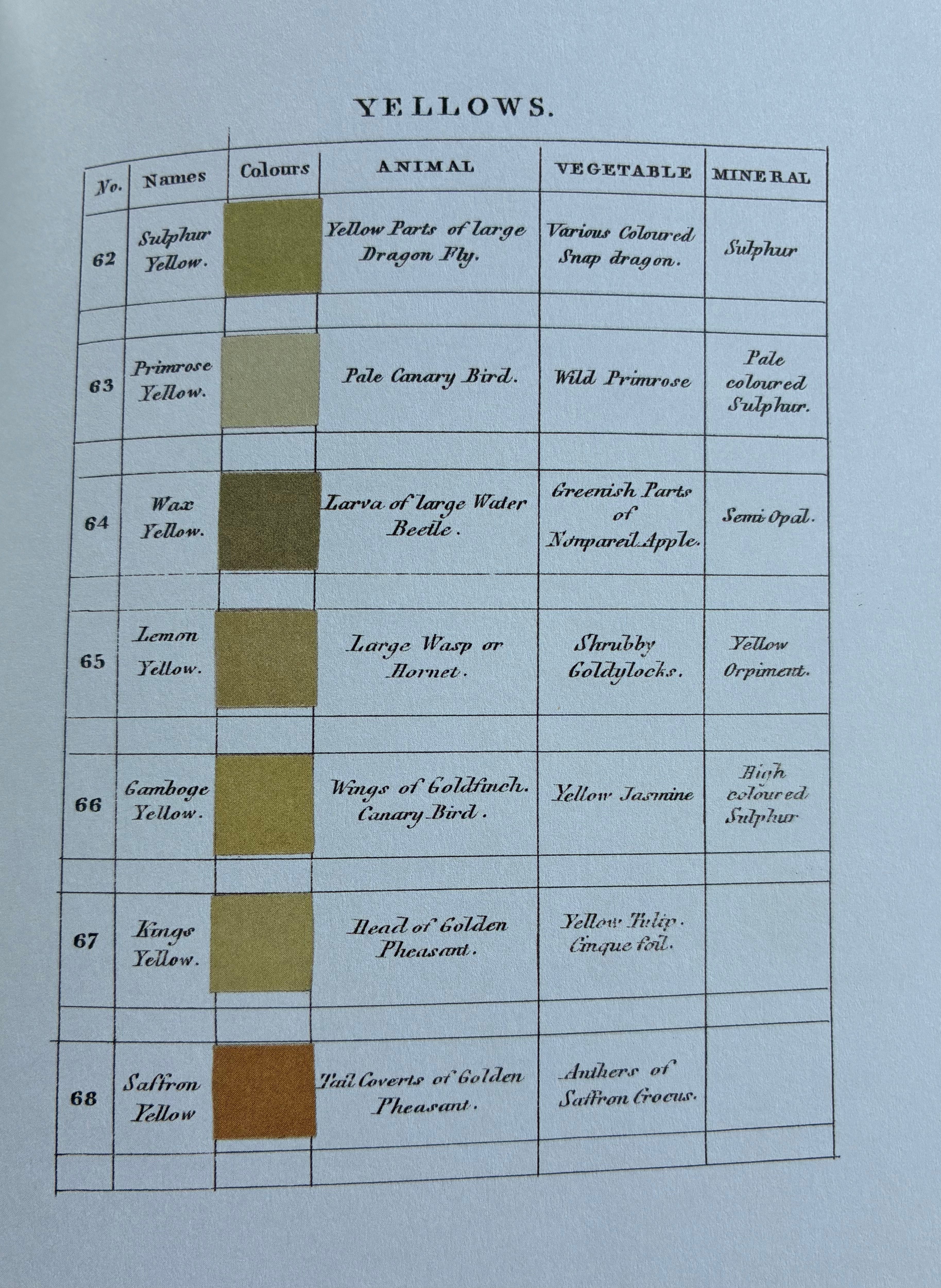
I descended upon said box like my dog descends upon a hamburger dropped by a careless toddler. In it, I found Midnight’s Children; a glossy, bland pasta cookbook; and, gem of gems, this beauty:
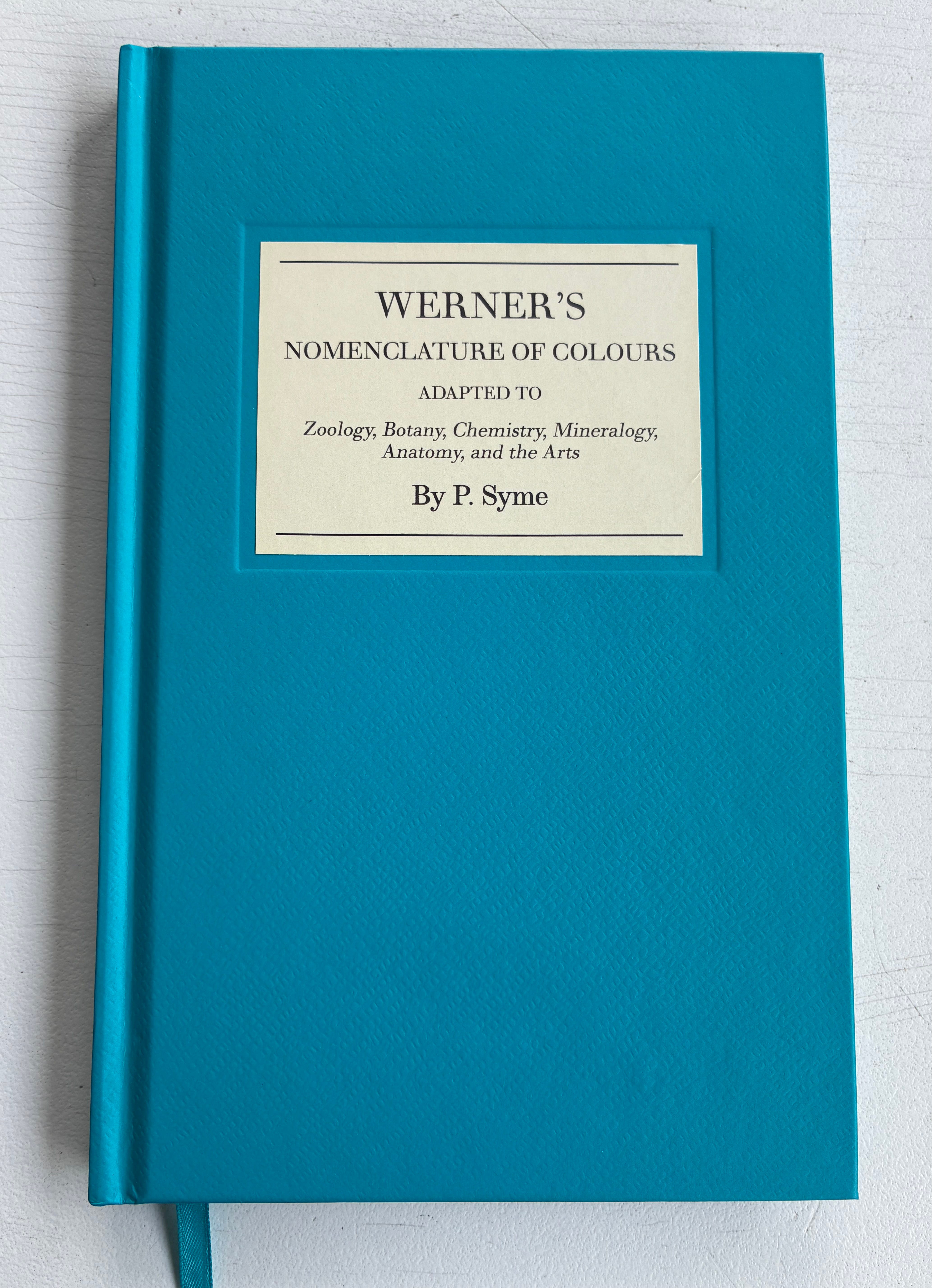
It has a British Museum of Natural History stamp inside, and was written in 1821 by Patrick Syme, “Flower-Painter, Edinburgh.”
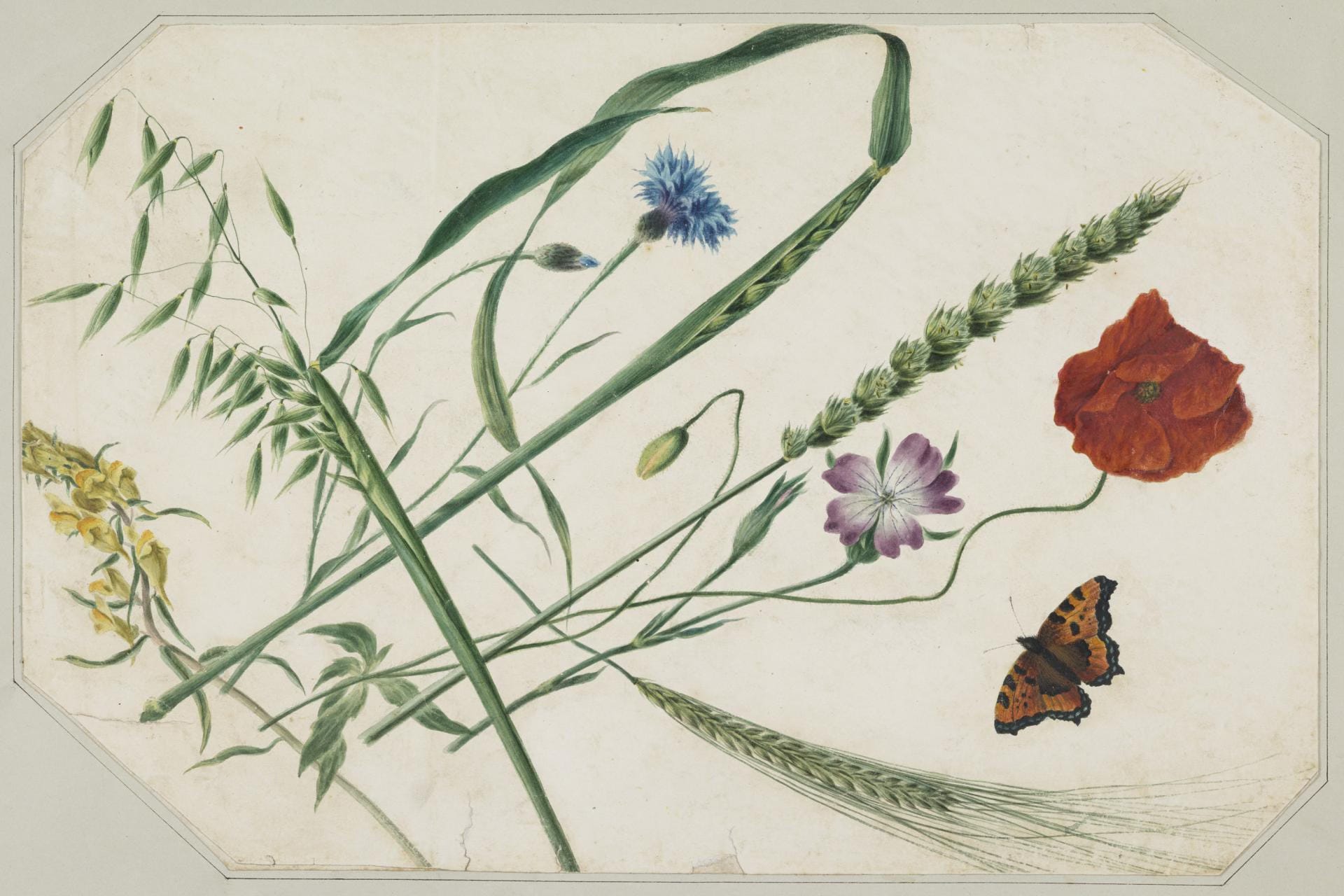
I found some of Syme’s paintings on the website of the National Galleries of Scotland:
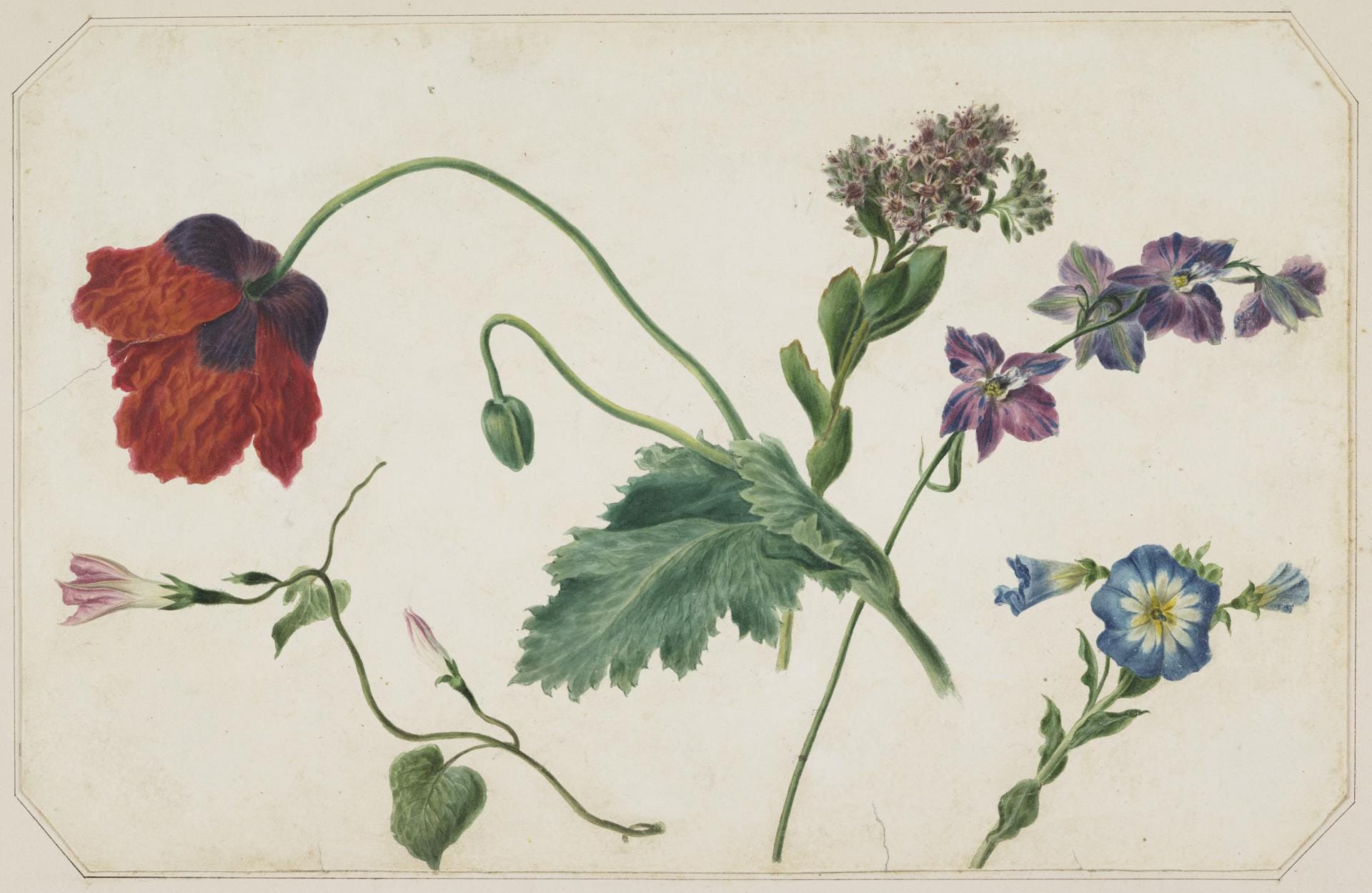
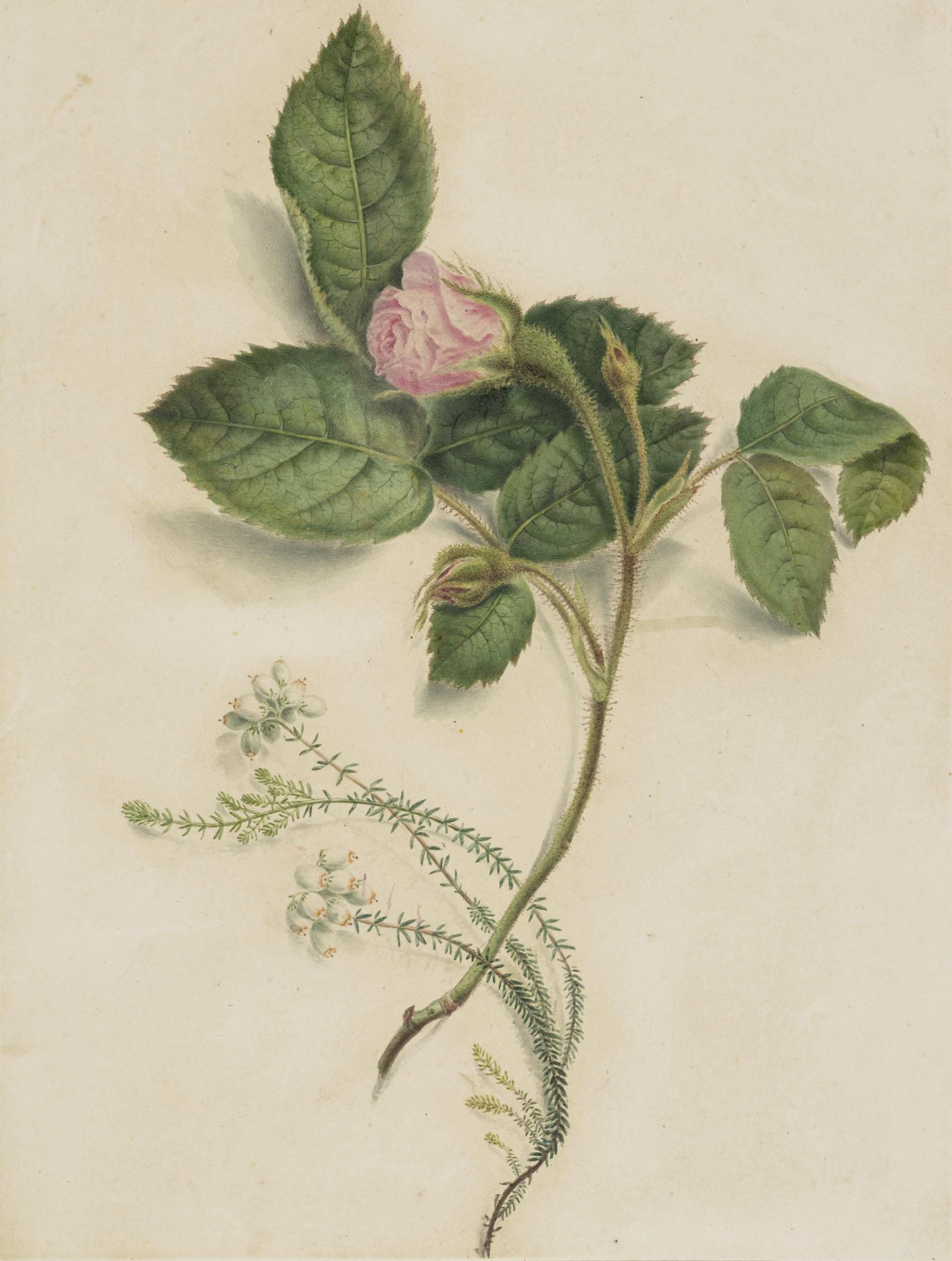
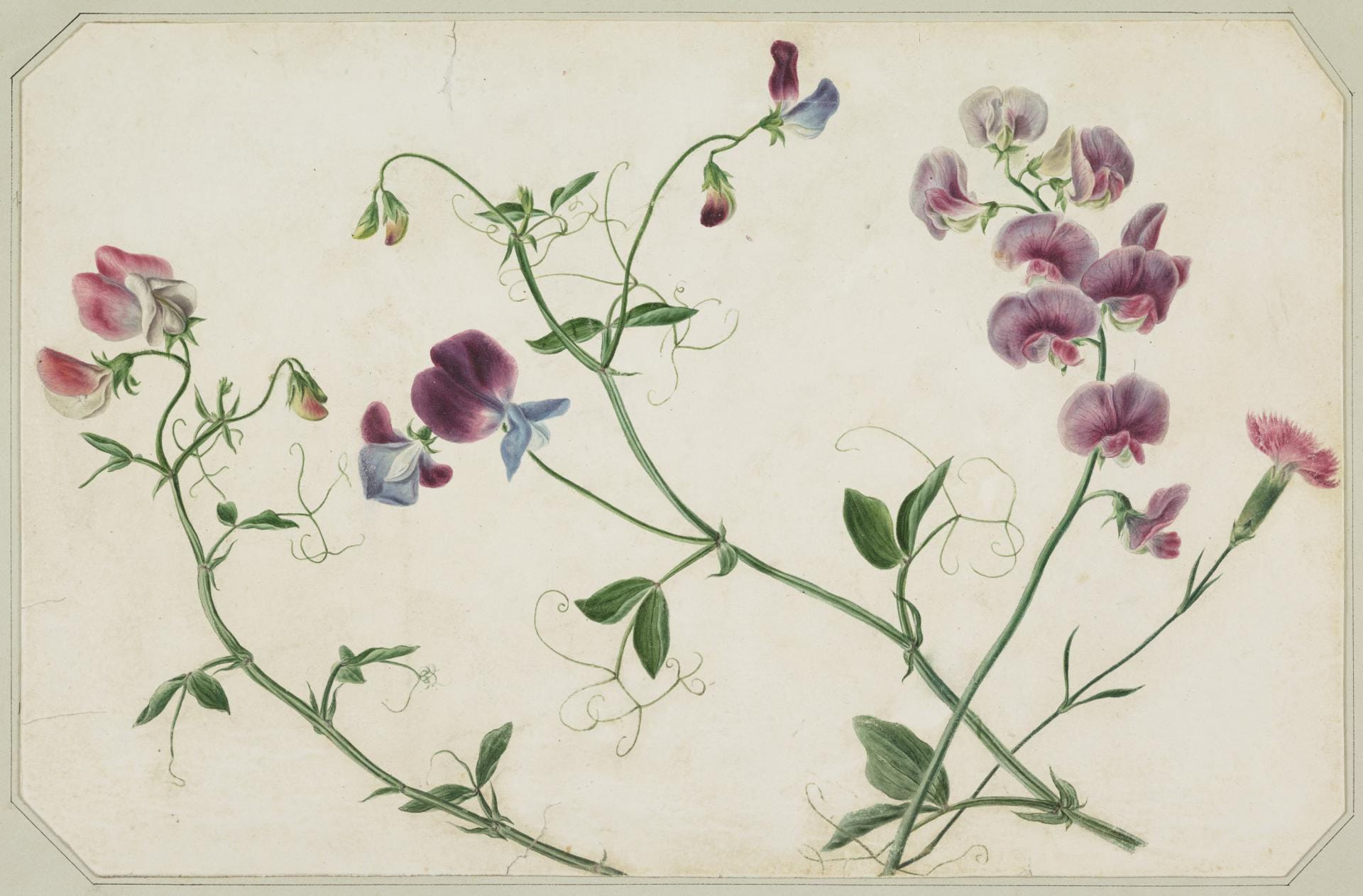
Seeing these paintings makes me understand why one of Patrick Syme’s rich young lady drawing students defied her important judge dad and ran off with Syme to the English countryside.

For upcoming work, I’ve been reading a textbook called English Composition as a Happening. It’s written by a white guy named Geoffrey with a PhD in Composition Theory who teaches courses on Tupac in which he asks his students to collect cultural artifacts about rap and assemble them á la the French Situationists into “arcades.”
I cannot think of anything more peak academia and yet let me tell you, this book is freaking awesome.
It made me excited about both writing and teaching, and it articulated exactly what I’ve witnessed and felt in my decade plus (!!) of teaching composition – that the role of the English teacher in “the academy” is largely to get students to ape the style of previous masters from Foucault to Foster Wallace; to train them in the Language of the University, an elevated dialect of intellectuals who stand at a great and dignified remove from what they study and zombify it into a shriveled husk with language.
The Onion provides a great example of such language in their classic “Grad Student Deconstructs Takeout Menu”:
“‘Seeing this long list of traditional Mexican foods—burritos, tacos, tamales—with a price attached to each caused me to reflect on the means by which capitalist society consumes and subsumes ethnicity, turning tradition into mass-marketable ’product’ bleached of its original ’authentic’ identity,’ Rosenblatt said.”
This is the exact area of expertise of Large Language Models, which is why students find them so very helpful for academic tasks. Watch Claude go!
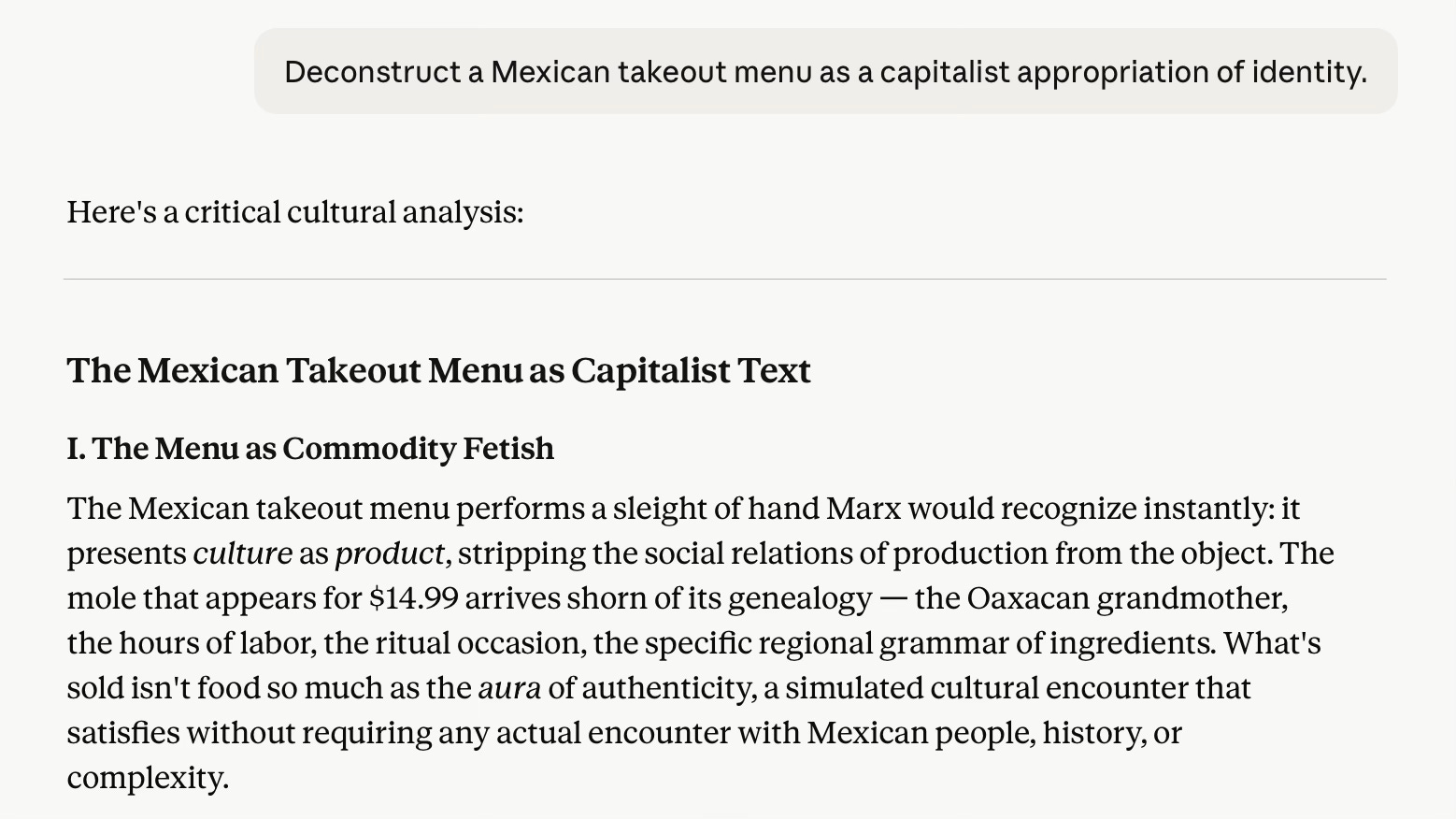
This is A+ Freshman Student Writing. It’s also bland, obvious, dead, “inert gloss” and a “simulacra of thought.” It’s a performance for an A that understands language as an empty series of gestures that signify a certain kind of training and little else.
It’s not that theorizing and analyzing serve no purpose, or dense academic text is never useful – it has its place, and I’ve read and generated plenty of it without regret and with some breakthroughs.
The problem is that freshman composition trains students to rotely apply it to their summer job at the Dairy Queen or their missionary trip to Guatemala so that all life and experience gets churned through the sausage-maker of Writing (or just a straight-up LLM) into a stab-me-in-the-eyeball snooze of an essay.

One could make a similar accusation of a lot of writing here on Substack, particularly in Notes, and in all writing for social media these days. The formula is different but equally formulaic. See:
Inciting Incident: “I was late for work the other morning because my daughter asked me for a cookie.”
Profound Insight: “I realized we are all so rushed in our lives that we can’t even sit together to share a cookie.”
Sell/Breakthrough: “That’s why I founded Cookie Time, an app for busy working mothers to spend five minutes each day eating cookies with their children!”
The Substack personal essay formula is a bit more literary, weaving in analysis and digressions, but a formula it is. And the problem with the formula is that it can suffocate the life beneath the words, and what words need to do more than ever right now is bring vigor: bring the Schenley Pool on a summer afternoon when two hipsters with identical mullets are crocheting and doing tandem yoga, and the lifeguard is saying to a little boy who just failed his deep test you have to be one with the water, and the giant oaks of Schenley Park make a pom pom shimmery sound in the breeze, and the water is ice and the sun is melted butter.

Vigor: Patrick Syme, Flower-Painter, cataloguing colors.
English Composition as a Happening argues that composition, once a radical field in the 1960s in which classes took place by candlelight in auditoriums with assignments like, “You’ve written an A paper, but you’re going to die as it’s read. What do you do? What’s the paper? How do you want to both begin and end?” has instead become a mind-numbing exercise in careerism in which students learn how to make arguments, use quotations, provide examples, and tie everything up with a tidy intro and conclusion, none of which anyone anywhere would ever want to read unless paid and provided health insurance.
Instead, this guy, Geoffrey Sirc, who I really wanted to have a beer with by the book’s end, uses the model of avant-garde artists from Duchamp to Jackson Pollack to show why composition should be a “happening” – an artistic event, unfolding in real time, that blurs the line between performance and real life, performer and audience, art and self, and heightens everyone’s awareness of the everyday.
The term “happening” was coined by artist Allan Kaprow, who came up with it – yes of course, where else?? – on a mushroom hunt with the sound artist John Cage.
Cage’s piece 4’33, in which an audience sits for four minutes and thirty-three seconds and listens to whatever ambient sounds occur in the environment, is the premier example of a happening. (Check out this extraordinary biography of Cage for more on his work, which was closely tied to his Buddhism.)
The piece “Applause Encouraged,” by the artist Scott Polach, in which an audience gathered at a cliff, applauded at the conclusion of the sunset, and was served refreshments, is another example.
“We haven’t really evolved an idea of writing that fully reflects the splendor of the medium,” Sirc writes. There sure as hell isn’t any splendor coming from textbooks entitled Ways of Reading and They Say, I Say.
But you know what invokes splendor? A blue the color of a “beauty spot on the wing of a Mallard Drake,” or the “stamina of a Single Purple Anemone,” or a yellow the shade of the “anthers of the saffron crocus.”
You know what might evoke splendor? Asking students to name every color in the classroom on little pieces of paper, and then duct-taping these papers to surfaces, and then walking around in groups debating which colors best fit which areas or items, and why, and what feelings they generate, and afterwards following up with research on colors combined with one’s own color experiences in a text about color as being, mood, impulse, culture.
This is, Sirc declares, “pedagogy as dare,” with the goal being “the reengagement of the heart, a new tuning of all the senses.”

In her recent essay for Longreads, the artist and writer Jenny Odell explores “different technologies of seeing”: ways of relating to and understanding the natural world that allow us to escape our egocentrism as individuals and as a human species.
With her usual brilliant range, Odell covers the practice of “deep listening”; the way plants smell; and a performance art piece on Rockaway Beach in which 21 dancers danced down the beach over the course of six hours, performing a series of “actions and responses to nature at the beach,” including cartwheels, curling up like rocks in the surf, and “mirroring” the actions of beachgoers in slow motion.
Of the performance, The New York Times wrote, “During rehearsals, beachgoers stared and sometimes laughed. Many drifted away, but a few asked what was going on. Evans would tell them, ‘I’m just reframing your actions as a dance’ or talk about how they are engaging with ‘the dance of the everyday.’”
A happening. The dance of the everyday.
Petrichor: the scent of rain on dry soil.
Shrubby Goldylocks yellow.
The Eastern European woman shaking white linen out of an upstairs window at dusk.
The neighbor Lou who tells me he brought coffee every morning to Mr. Rogers (yes, that Mr. Rogers) when he was a student at Central Catholic and Mr. Rogers was at WQED, and after a week Mr. Rogers had the courage to tell him he didn’t drink coffee but “don’t worry, it never goes to waste,” and after that Lou brought him green tea because he loved Mr. Rogers so much, and Mr. Rogers had a rescued St. Bernard and regularly brought the St. Bernard to come say hello to Lou at the store where Lou worked as a stocker, and if one had a chemical dependency wouldn’t one want Mr. Rogers as his father? and while telling me all this, smokes a cigarette out of the corner of his mouth and feeds my dog treats.
The four brothers at Schenley Pool every single time we go, who speak Arabic and constantly launch themselves in new and bold configurations into the four feet and say, “Sorry, sorry,” when they splash me where I sit by the deep, and who wear oversized T-shirts and giant snorkeling goggles and have a tiny infant sister.
The audiobook I am listening to that made me stop and weep in the park the other morning where gold light – gold of Christmas tinsel, gold of finch in sunbeam – filtered through the oaks.
The autistic teenage boy at Elena’s summer camp who plays fetch with Pinto every morning at drop off and shouted one day as I left, “We should have a camp just of people bringing dogs!”
The entire Estadio Azteca stadium in Mexico City singing “Cielito Lindo” during the Mexico vs. Czechia game.
Ay, ay, ay, ay,
Canta y no llores,
Porque cantando se alegran,
Cielito lindo, los corazones
Woe, woe, woe, woe,
Sing and don’t cry,
Because singing, darling,
Lifts our hearts.

Composition as a happening. It’s a pedagogical dare, sure, but it’s also a personal one, a community one: if words are increasingly being sucked dry by AI vampires, how can we renew their life? How can we feel them again, make them urgent, wild, absurd, delightful? How can we bring back the splendor of language?
This is the task of the teacher, the artist. Reclaim the goddamn em dash from the regurgitative LLM.
– slitted crocodile eyeballs –
– nineties-style dance moves with hands perpendicular to the body, hip shimmer –
– skateboard gliding down glossy asphalt –
– a slippin’ slide –
Aiming for something bolder, beyond the essay, beyond the realization, beyond the story, beyond me telling you, you receiving – but what?
The word a little sizzle like the electric shocks from the machine an old man used to carry around the market in Oaxaca, intoning “Toques, toques” – shocks, shocks, his finger clipping a little wire to yours and pressing a button and bzzzzzzzzzzzzzzzzzzzz.

I hope you’re enjoying Terms of Endearment!
Here you’ll find essays about art, travel, books, motherhood, culture, teaching, and more.
This work is free for everyone. A paid subscription supports the labor that goes into it – the time, energy, thought, and care behind each piece.
For $30 a year, you can support writing you care about. Thank you!
And in this vein, a tiny exercise, something new to try here:
Choose a color from this excellent list of Crayola crayon colors. In a comment below, state which one you chose. Add why in a sentence.
Mine is “manatee.” Why? Reminds me of summer thunderstorms seen from a Toyota Tercel on I-71 between Cincinnati and Columbus.
I read this a couple of days ago. It must have been brewing in my subconscious because this morning while sitting on the patio doing my morning thing, the spirit of the coffee spreading through my veins, I realized I was in the midst of a happening. A quick poem came to me. Thanks for the prompt!
***************************************************
The color of a yellow Crayola crayon, and more,
The sun, at this moment, backdrops
A silhouette of the chirpy wren
Poised on the branch of the sturdy, young, pecan tree
Gentle breeze, bobbing leaves
Sparks of photons
Who set sail from their home in that Crayola sun
Nine minutes ago
Apricot - reminds me of my childhood home where we had many apple trees but also one somewhat spindly apricot tree that every year produced a handful of petite pale orange apricots. Started my love of apricots and their very fleeting season.